
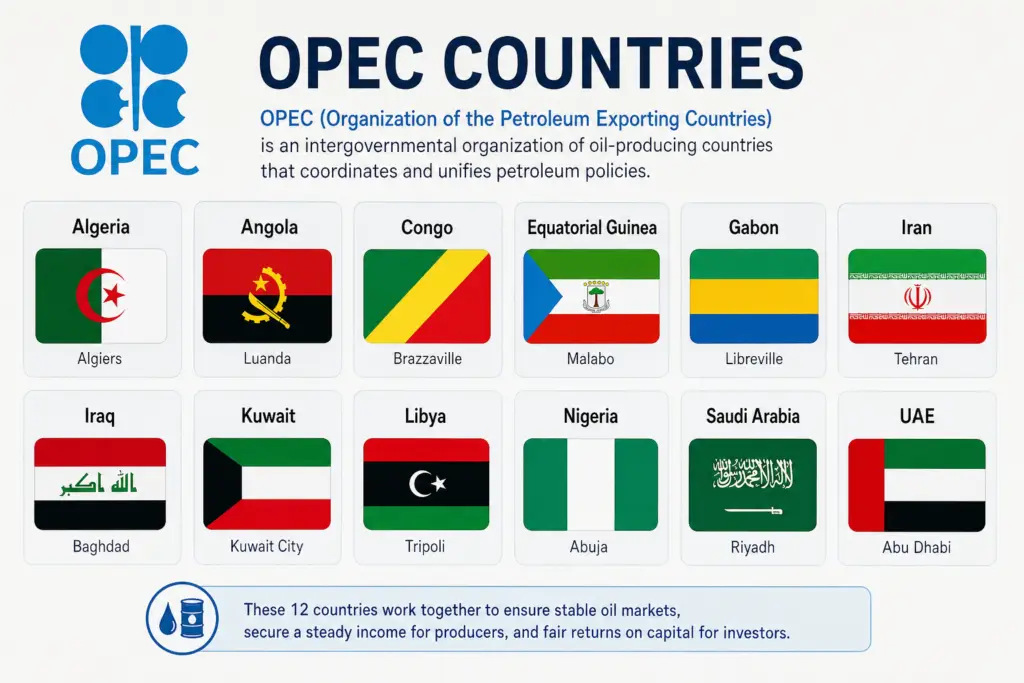
In a dramatic shift that could reshape global energy politics, the United Arab Emirates has announced it will withdraw from OPEC and its allied framework OPEC+, delivering a significant blow to one of the world’s most influential oil blocs at a moment of acute geopolitical tension.
The decision, set to take effect on May 1, comes as the ongoing conflict involving the United States, Israel, and Iran continues to disrupt energy markets and rattle the global economy. Gulf oil producers are already facing mounting challenges, particularly in moving exports through the strategically vital Strait of Hormuz—a narrow corridor responsible for transporting roughly a fifth of the world’s oil and liquefied natural gas.
In an official statement, Emirati authorities framed the move as part of a broader recalibration of national priorities. After decades of participation, the country signaled it would now prioritize its own long-term economic strategy and evolving energy ambitions over collective production agreements.
Energy Minister Suhail Mohamed al-Mazrouei underscored that the withdrawal was the result of careful internal assessment, emphasizing that it was a sovereign policy decision made independently, without consultation with other major producers such as Saudi Arabia.
Analysts warn that the UAE’s departure could undermine cohesion within OPEC, a group that has historically sought to project unity despite internal disagreements over output quotas and geopolitical alignments. Losing a key Gulf producer risks weakening the cartel’s ability to manage supply and influence global oil prices.
The timing is particularly sensitive. Maritime security concerns in the Strait of Hormuz have intensified due to threats and attacks linked to the regional conflict, complicating export routes and adding volatility to already strained energy markets.
Meanwhile, Donald Trump has previously criticized OPEC for driving up oil prices, even linking U.S. security commitments in the Gulf to what he described as unfair pricing practices by member states.
The UAE’s exit marks the end of a long chapter: it first joined OPEC in 1967 through Abu Dhabi and continued its membership after forming as a unified nation in 1971. Its departure now signals not just a policy shift, but a potential turning point in the balance of power within global energy governance.

