How to Write a Cover Letter
in 2026: The Formula
That Actually Gets Interviews
Most cover letters are written the same way. They open with “I am writing to express my interest in the [Role] position at [Company].” They summarise the resume. They close with “I look forward to hearing from you.” They get skimmed in eight seconds and forgotten.
A cover letter that actually works does something different. It opens with something specific. It connects your experience directly to the company’s current needs. It is confident without being arrogant. And it makes the hiring manager feel like you wrote it specifically for them — because you did. This guide gives you the exact formula, structure, and word-for-word examples to write a cover letter that gets read in 2026.
Do Cover Letters Still Matter in 2026?
Yes — but only if you write them correctly. Here is the nuanced reality.
When you apply through a job portal with hundreds of other candidates, a cover letter is your one opportunity to speak directly to the hiring manager before they open your resume. Done well, it does something no resume can: it shows personality, demonstrates research, and creates a connection.
Done badly — which is how most cover letters are done — it is worse than not having one at all, because it signals low effort and generic thinking.
Always include a cover letter when applying to companies with under 500 employees — smaller teams read them more carefully. Always include one for roles where communication or writing is a core skill (marketing, PR, sales, content, HR, legal). Always include one for roles you are slightly underqualified for on paper — this is where the letter does the most work.
The 4-Part Cover Letter Formula
Every effective cover letter in 2026 follows the same underlying structure. The writing style varies — the formula does not.
The Hook
One sentence that makes them keep reading. Specific, relevant, and never generic.
The Value Bridge
Connect your most relevant experience directly to their specific need. One or two focused paragraphs.
The Company Connection
One sentence showing you understand their world — their product, challenge, or mission — not just the job description.
The Close
Confident, direct, and action-oriented. Ask for the meeting. Do not grovel.
Writing the Perfect Opening Line
The first sentence determines whether the rest gets read. Most people open with the same line — which means opening differently is an immediate differentiator.
Read your opening sentence alone. If it could apply to any candidate applying for any job at any company, rewrite it. The opener must be specific enough that only you could have written it for this role at this company.
The Body: Connecting Your Value to Their Need
The body of your cover letter is where most people either win or lose the reader. Two common mistakes: summarising the resume (they can read it themselves) and listing generic skills (everyone says they are a team player).
The body should do one thing: draw a direct line between a specific problem the company has and a specific result you have achieved that demonstrates you can solve it.
How to Find the Need to Address
Read the job description carefully for pain points, not just requirements. Phrases like “help us scale,” “improve our process,” “rebuild our brand,” or “launch our first X” are signals of the actual problem they are hiring to solve. Address that problem directly — not the bulleted list of requirements.
Closing That Invites a Response
The close should be confident and direct. It should ask for the next step without desperation or excessive formality.
Full Cover Letter Example: Marketing Manager Role
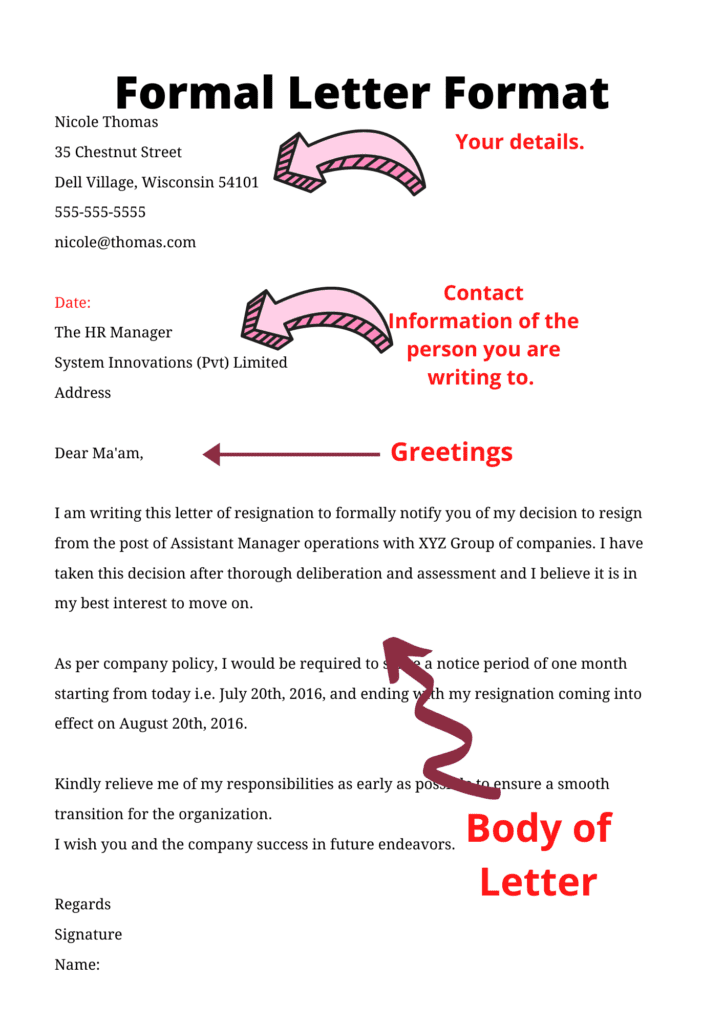
Here is a complete, annotated cover letter using the 4-part formula. Adapt the content — keep the structure.
Before that, at Junction Media, I managed a team of four across SEO, paid, and email — and we grew organic traffic from 80,000 to 310,000 monthly sessions in two years by rethinking our editorial calendar around search intent rather than internal priorities.
5 Mistakes That Kill Cover Letters in 2026
1. Starting With “I”
Starting your cover letter with “I” immediately centers the letter on you rather than on the employer’s needs. Open with a specific observation, a result, or a reference to the company — then bring yourself in. It is a small shift that changes the entire energy of the letter.
2. Copying the Job Description Back to the Employer
Listing the qualifications from the job description as your own skills is the most common and most transparent mistake in cover letter writing. They wrote the job description — they know what it says. Show you meet those requirements by demonstrating results, not by echoing requirements.
3. Writing a Wall of Text
A cover letter should be 250 to 400 words maximum. Three to four short paragraphs. White space is your friend — it signals confidence and clarity. A dense, four-paragraph essay signals an inability to edit yourself, which is a red flag for roles requiring communication.
4. Using Clichés
Phrases like “passionate about,” “team player,” “fast learner,” “results-driven,” and “I thrive in dynamic environments” are meaningless because every candidate uses them. Replace every cliché with a specific example. Instead of “results-driven,” show a result. Instead of “fast learner,” show how quickly you acquired a new skill in a previous role.
5. Not Customising for Each Role
A generic cover letter is almost always detectable — and immediately deprioritised. Hiring managers read hundreds of applications. A letter that references something specific about the company, the role, or the team signals effort and genuine interest. Even 10 minutes of company research before writing dramatically changes the quality and impact of the letter.
Cover Letters for Different Situations
When You Are Underqualified
Lead with your transferable strengths and acknowledge the gap directly and briefly: “While I have four years of experience rather than the six listed, I have consistently delivered at a level above my title — and I am committed to closing that gap quickly.” Then demonstrate with results. Confidence without arrogance is the tone to hit.
When You Are Changing Careers
Frame the change as an evolution, not a departure. Identify the transferable skills between your old field and the new one — these are your bridge. Lead with those bridges, not with your unfamiliar background. “A decade in operations management taught me to think in systems. That is exactly the mindset I am bringing to product management.”
When You Are Returning After a Gap
Acknowledge it in one sentence, pivot immediately to what you did during the gap and what you are bringing now: “After a two-year caregiving period, I spent the past six months completing a Google UX Design certification and freelancing on three small product design projects. I am energised and fully committed to returning to full-time work.”
When Applying Without a Job Posting (Cold Outreach)
This is actually where a great cover letter does the most work. Lead with why this specific company, be explicit that you are inquiring about potential opportunities, demonstrate you know their business, and make a clear and specific ask: “Would you be open to a 20-minute call to explore whether there might be a fit?”
Cover Letter Checklist: Before You Hit Send
- Opening line is specific — could only apply to this role at this company
- Does not start with “I”
- Body paragraph connects a specific achievement to a specific need in the job description
- Company name is mentioned at least once — and spelled correctly
- No clichés: no “passionate about,” “team player,” or “results-driven”
- Total length is 250 to 400 words maximum
- Close is confident and contains a specific, low-pressure call to action
- No spelling errors — especially not in the hiring manager’s name or company name
- Saved as PDF unless the application portal specifies otherwise
- Your contact details are in the header or first line
Frequently Asked Questions
Want a Cover Letter Written by Professionals?
Orbit Careers writes tailored, achievement-focused cover letters and resumes that get interviews. Every letter is customised to the role — no templates, no generic language.